The question is sometimes asked, “Which version of the Bible is best?” The answer of course is, “Best for what purpose? For doctrinal accuracy? For maintaining tradition? For inculcating faith in the youth? To promote stronger family scripture study? For missionary efforts?” Which Bible is “best,” depends on what you are trying to accomplish.
For English-speaking Latter-day Saints, the King James Version (KJV) is generally the go-to Bible. The KJV has long been celebrated for its majestic spiritual prose. For Latter-day Saints, the KJV is particularly important with its connection to modern-day revelations, including the JST. But there’s a challenge. The KJV is written at a 12th grade level, and the average American adult (to say nothing of young people) struggles to read at a 7th grade level. For many church members, the KJV is literally inaccessible.
The Church’s “Holy Bible” Page says, “The Bible can be difficult to understand. It would be appropriate to use a simpler Bible translation for youth and children or any who would benefit.“
The Church’s handbook statement makes it very clear that it is fine to use many Bible translations! (See the Newsroom and Church News articles for more information).
Here are five other Bible translations you might want to try, organized by reading level. They are all listed on the Church’s “Holy Bible” Page as “Examples of Other Translations” that can be used.
- The New Revised Standard Version Updated Edition (NRSVue) is highly regarded in academic settings for its scholarly precision, inclusivity, and formal tone. It is suitable for readers at a 11th grade level.
- The English Standard Version (ESV), written at a 10th grade level retains much of the KJV majesty, but also includes more accessible language. I’ve heard President Emily Belle Freeman say that its her favorite translation.
- The New International Version (NIV) has been the best-selling Bible in America for 40 years. It is widely praised for balancing readability and accuracy, making it accessible to a broad audience with a 7th grade reading level.
- While some feel like the New Living Translation (NLT) strays from the precise meaning of the original text, many appreciate it for its clarity, accessibility, and conversational tone. It is written at a 6th-grade reading level.
- The New International Readers Version (NIrV) is written specifically for readers at a 3rd grade level. It aims to provide clarity and simplicity while maintaining the core teachings of the Bible. If I were reading the Bible with kids under 12, this is likely the version I would use.
Print versions of these Bible versions are easily on Amazon, and digital versions are available for free on the Bible App and sites like biblegateway.com.
The reality is that having multiple English Bible translations is a huge benefit. Some will be perfect for elementary school age children to read on their own, others can help us see familiar texts in fresh ways. Don’t fear alternate translations, embrace them! It is okay to read versions besides the King James!
One more thing: In centuries past, many more people listened to the Bible than read it. Don’t be afraid to listen to the simpler Bible translations. I love the NIV Listener’s Bible (free version, Audible version). You could also try this ESV audio Bible. I was so engrossed listening to 2 Samuel that I missed the exit to the freeway one time! So give audio bibles a chance!
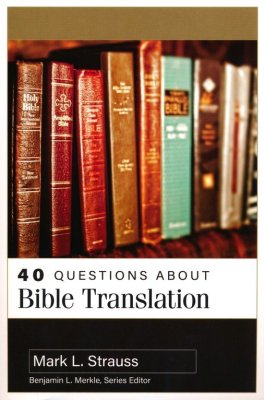
Want more info? For an introduction on issues related to English Bible translations I recommend the free articles, “Modern English Bible Translations,” “Why Bible Translations Differ: A Guide for the Perplexed,” and/or “‘As Far as It Is Translated Correctly’: Bible Translation and the Church.” If you want a deeper dive, check out 40 Questions About Bible Translation by Mark L. Strauss.


